|
|
|
Contents of this page:
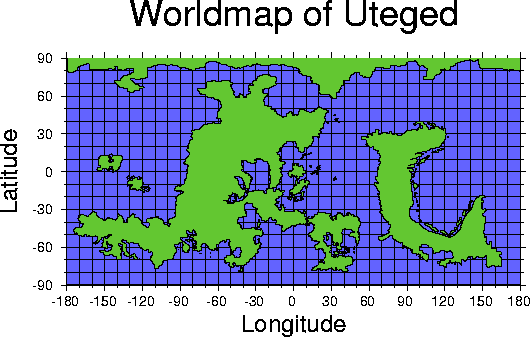
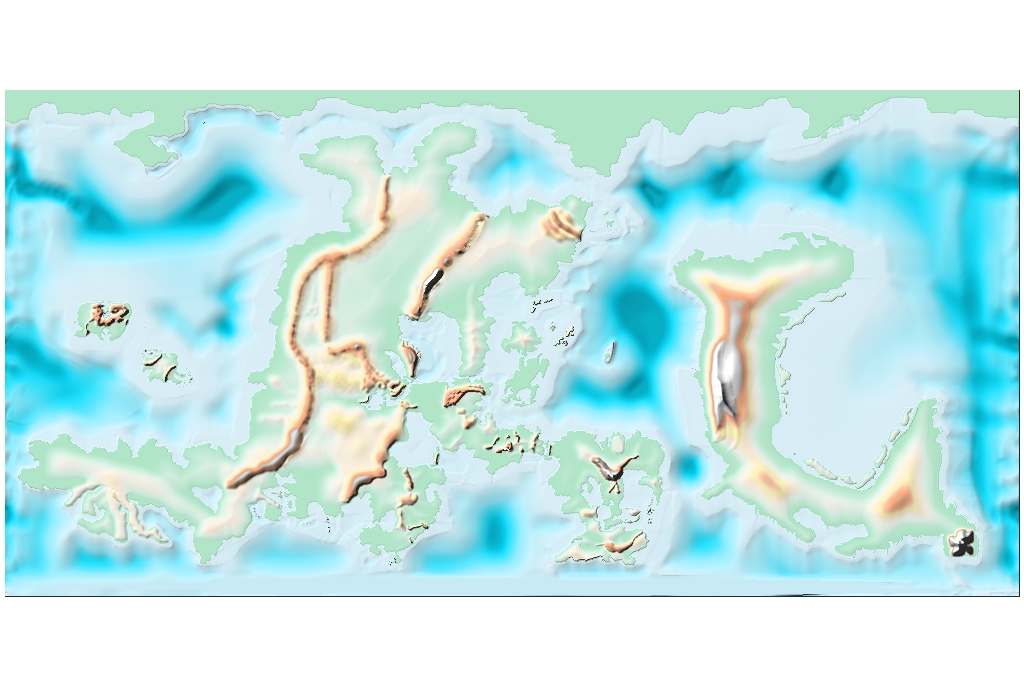
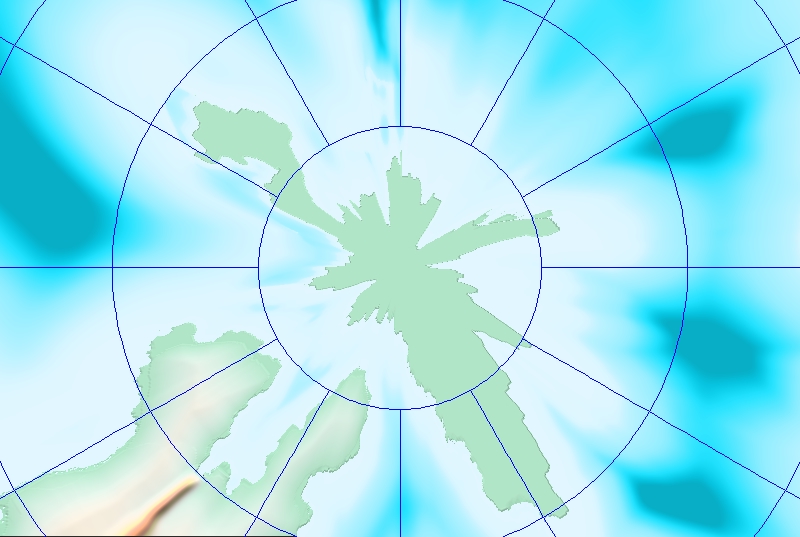
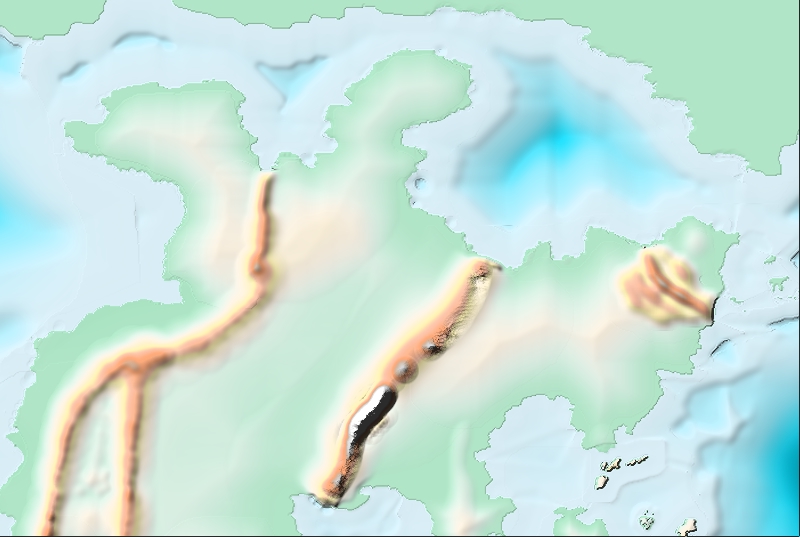
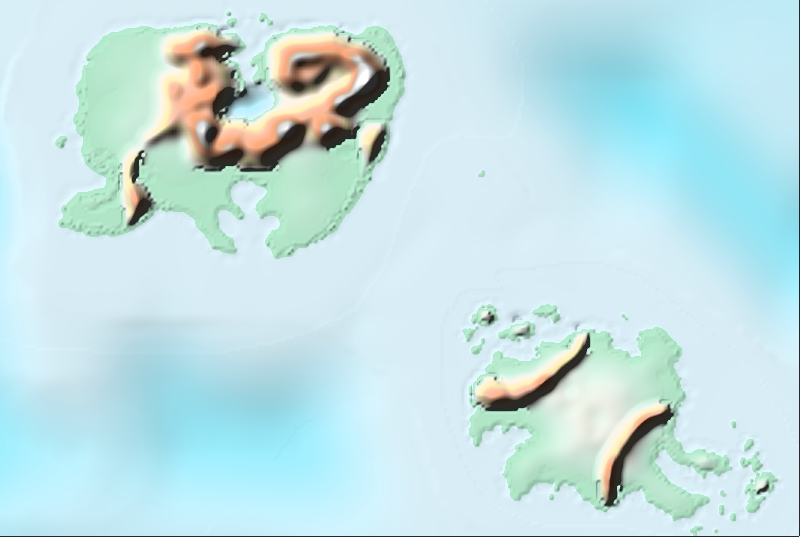
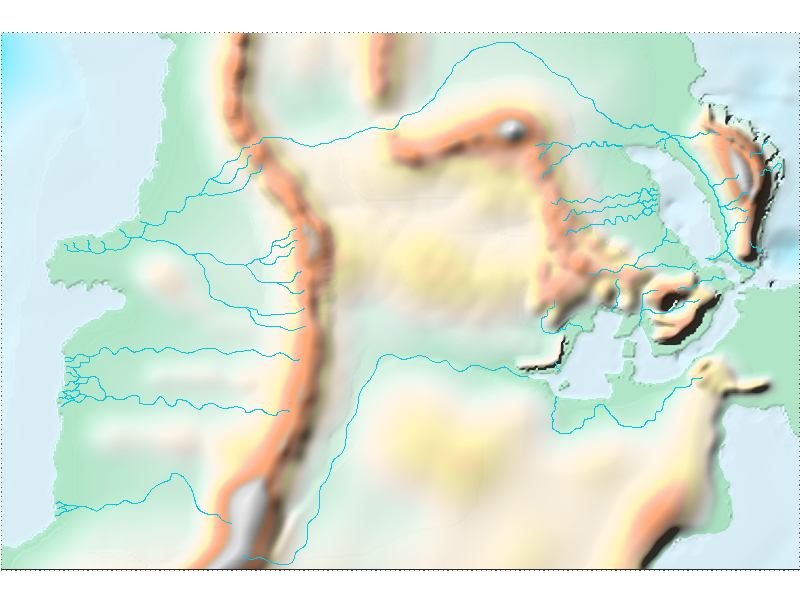
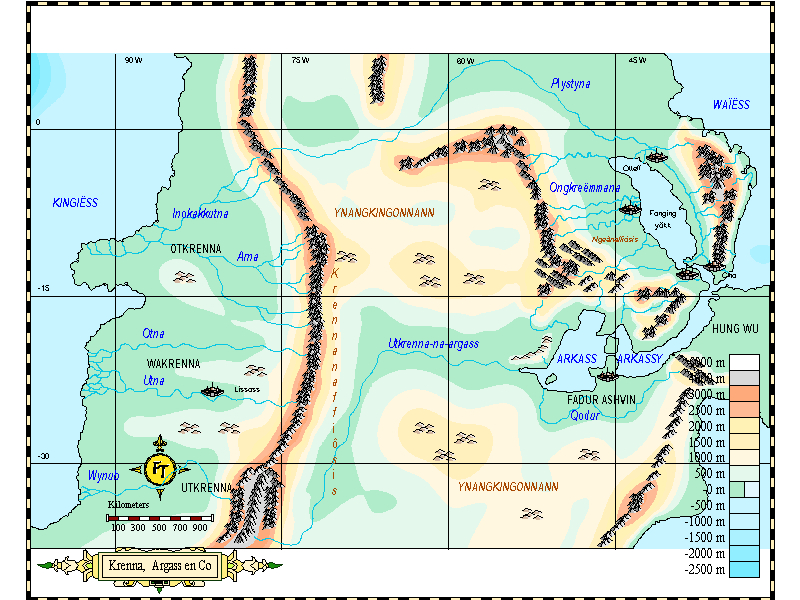
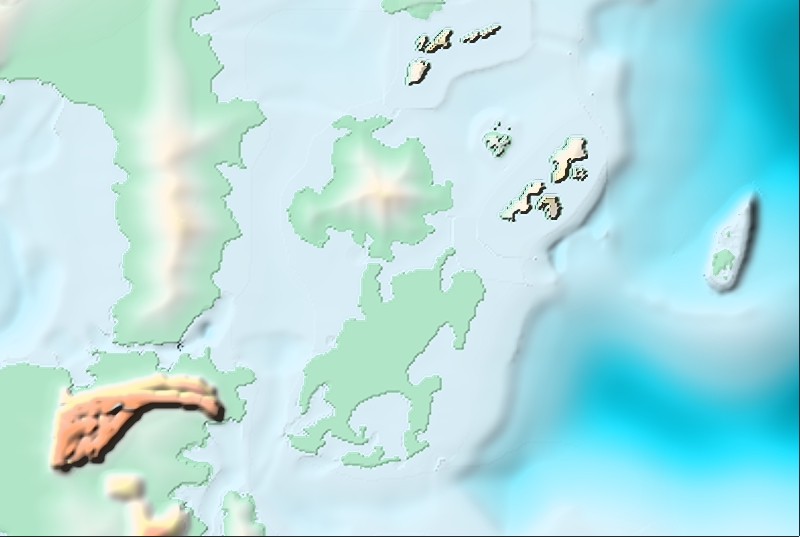
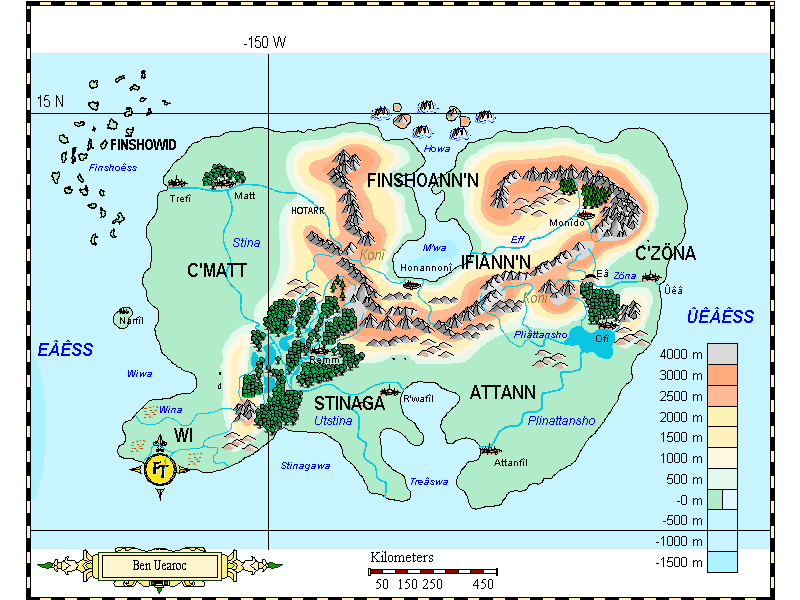
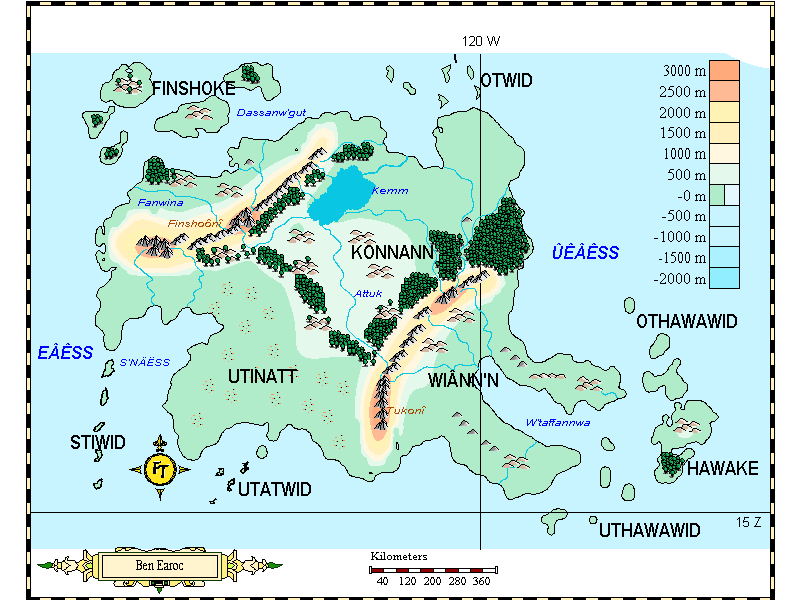
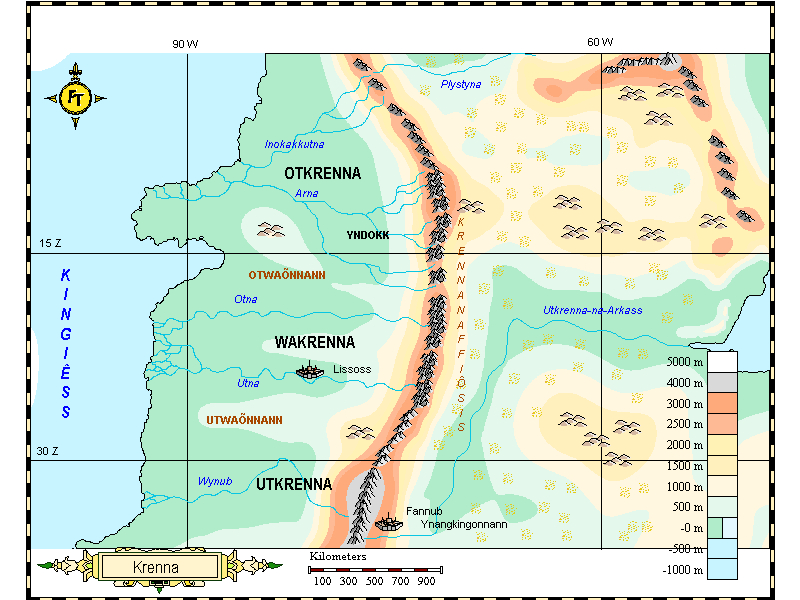
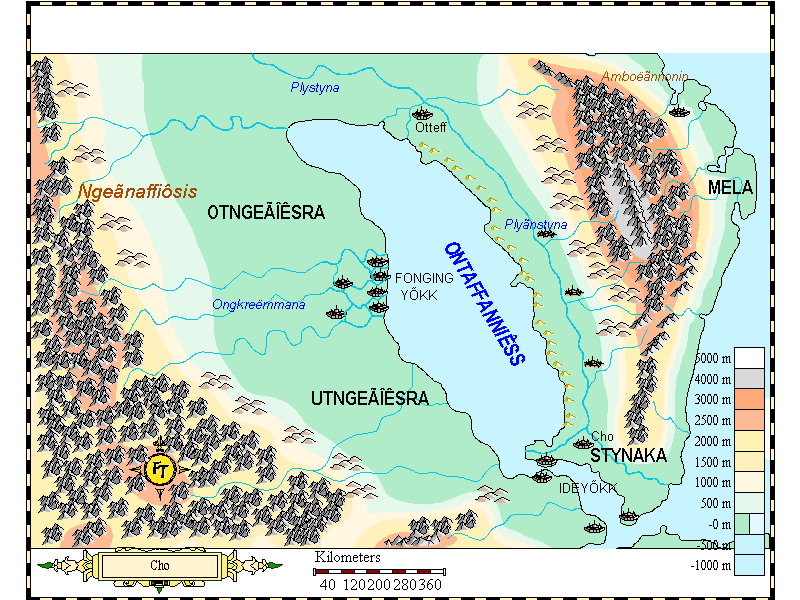
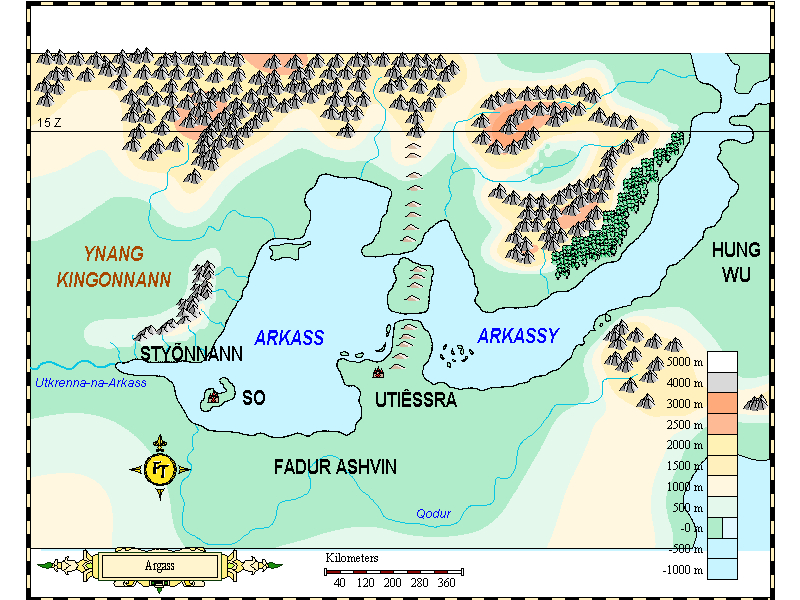
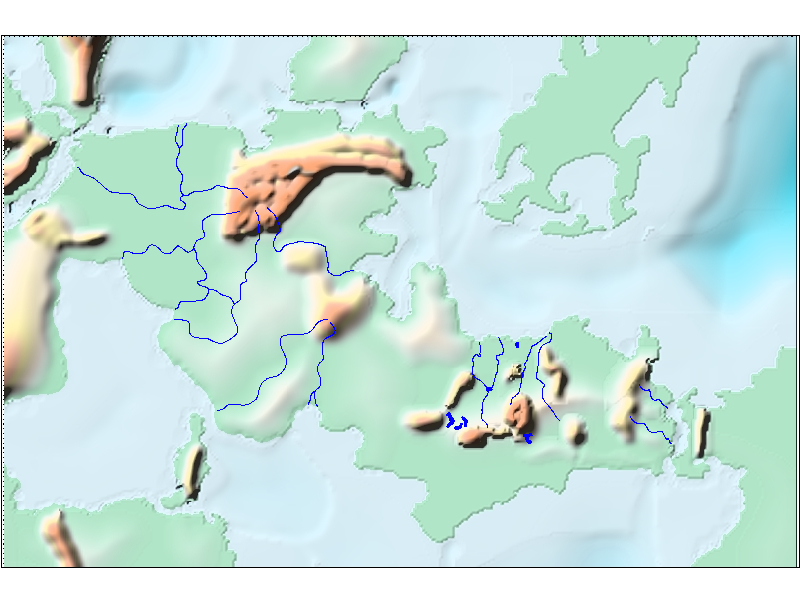
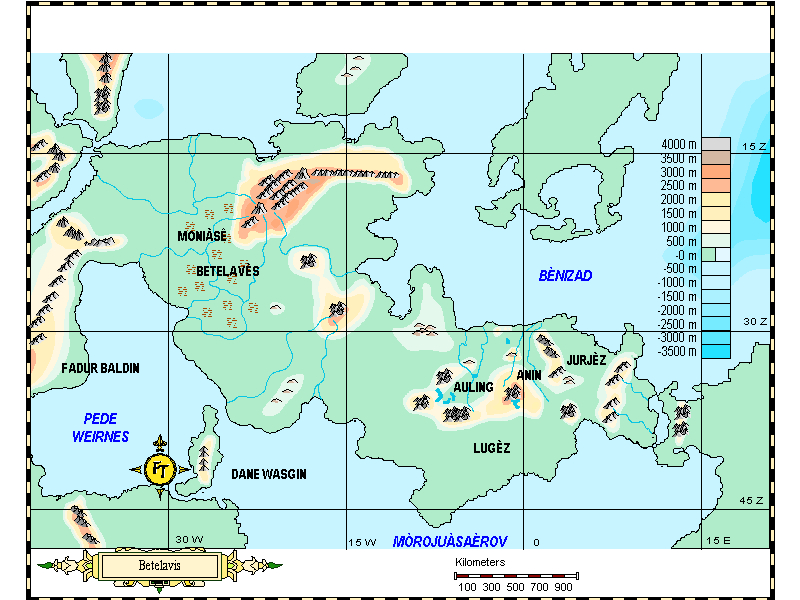
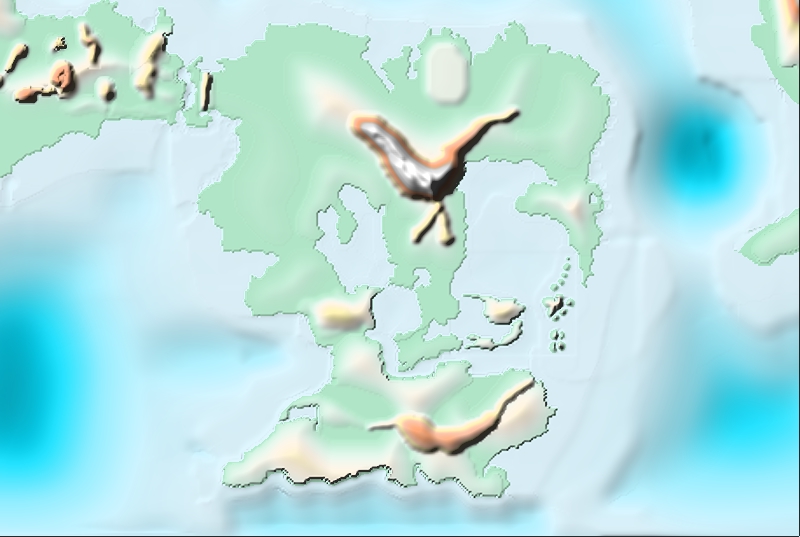
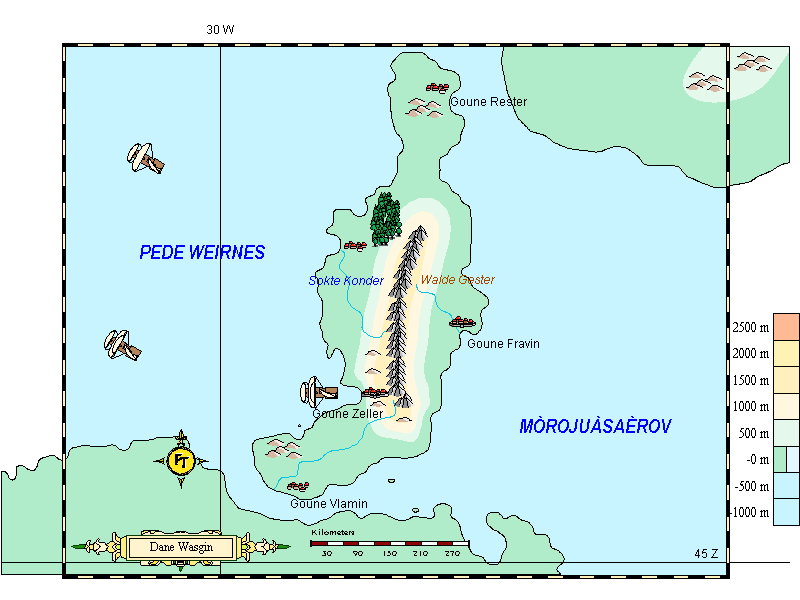
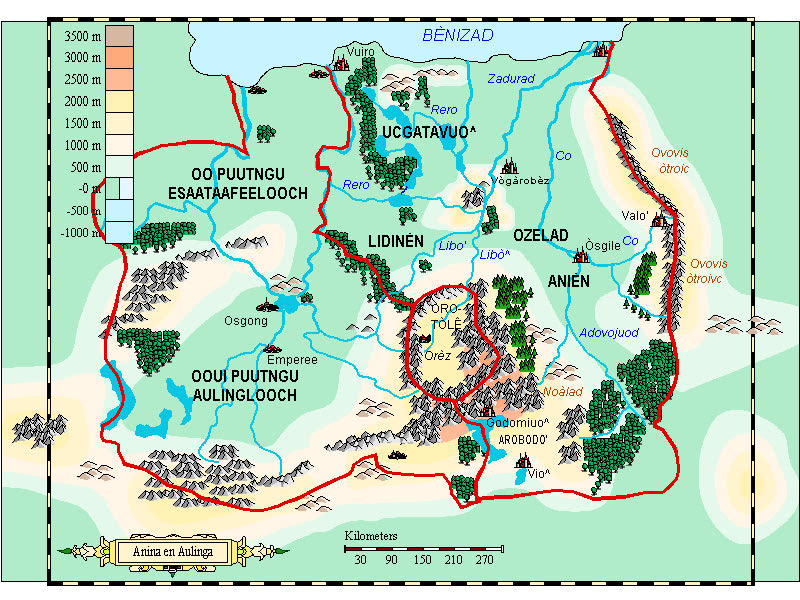
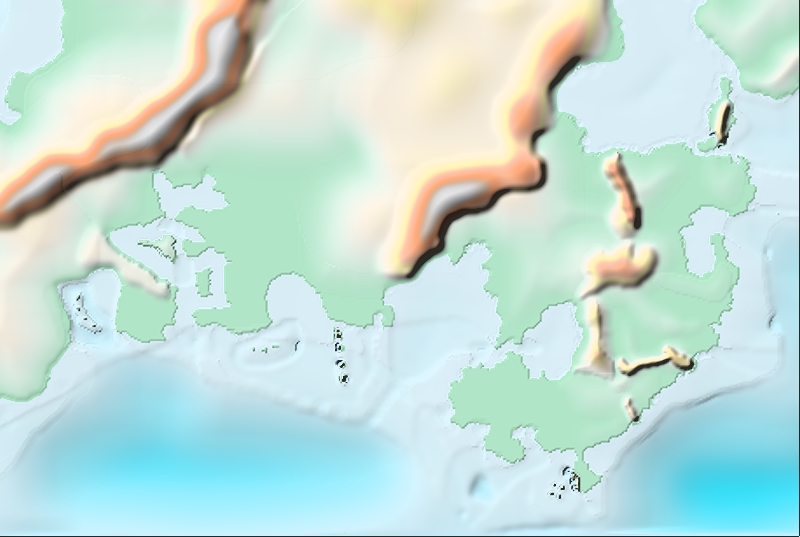
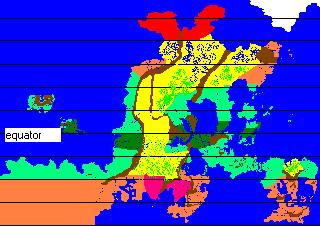
Topographical mapsClick on the worldmap map or on one of the thumbnails of the map you want to investigate.
 Top Top
The orbit of Uteged around Lazìm and LazasThe Applet below shows the Orbit of Uteged around Lazìm and Lazas. The yellow sun is Lazim, the red one is Lazas. You can choose to see the climate graphs or to see the sunrise and sunsets. Take note that the axis of Uteged is tilted by 30 degrees, so that the midnight suns start at 60 degrees north and south latitude. The colored bands around Uteged in the sunrise and sunset representation show the relative division of the light that falls on the equator. At higher latitudes this can vary greatly. Many different ways to count the hours are in use on Uteged. Generally a full day consists of twelve hours as opposed to our twenty four. To see the names of the several time intervals see below. The "day" is in the equatorial regions marked by the rising and setting of the closest star (which is largest in the sky). In the northern countries above 45 degrees latitude the day is generally counted according to the rising and setting of Lazas, because Lazìm will be below the horizon for large amounts of time. This means that during the Lazìm spring and autumn the sleeping hours between the northern and the central countries can differ between a quarter and half a day from one another! Please have patience as the loading of the graphics involved may take up to two minutes on a 28k8 modem.
On the climate graphs page you can study the climate graphs at your leisure. Main classes of vegetation
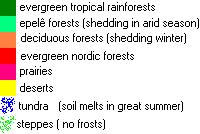
The epelê treeThe Epelê epelê tree plays a very important part in the food cycles of Uteged. Its leaves can be used to make tea (called epu' in Aninese), the dried leaves that fall from the tree in the arid season (the Aninese winter, which occurs every two earth years) is used as tobacco (it is called epa;) and its bark is edible (called epo'). Because of this, the bark is infested with vermin. The kind of vermin differs from location to location and in modern times specific species are bred in the bark in order to get different tastes. The pulpwood of the tree is very resistant to infestation, however and makes excellent raw material for building.The fire vegetationsThe great summer coincides with the dry season at 45 to 60 degrees of northern latitude. Because of this, frequent fires occur in this season. The tundra of the eastern northern continent change into huge plains of ashes, which has forced the inhabitants of this region to grow their crops in spring and summer and to live behind their water walls during the great summer (In winter they hibernate). The trees of the deciduous forests on the west and east coasts of the northern continent, will often be ablaze in the great summer, but only their foliage can burn; their bark is fire resistant. To adapt to this, the typical underground homes of the northern continent have developed.The time systemThe following table shows the Aninese and Aulingese names for the different time intervals that are in common use on Uteged.
| ||||||||||||||||||||||||||||||||||||||||||||||||||||||||||||||||||||||||||||||||||||||||||||||||||||||||||||||
|
|